Project
GCU Campus Map
Category:
Website - Printable - Kiosk
Client:
Grand Canyon University
Service:
Research - Design
Meet the GCU Campus Map
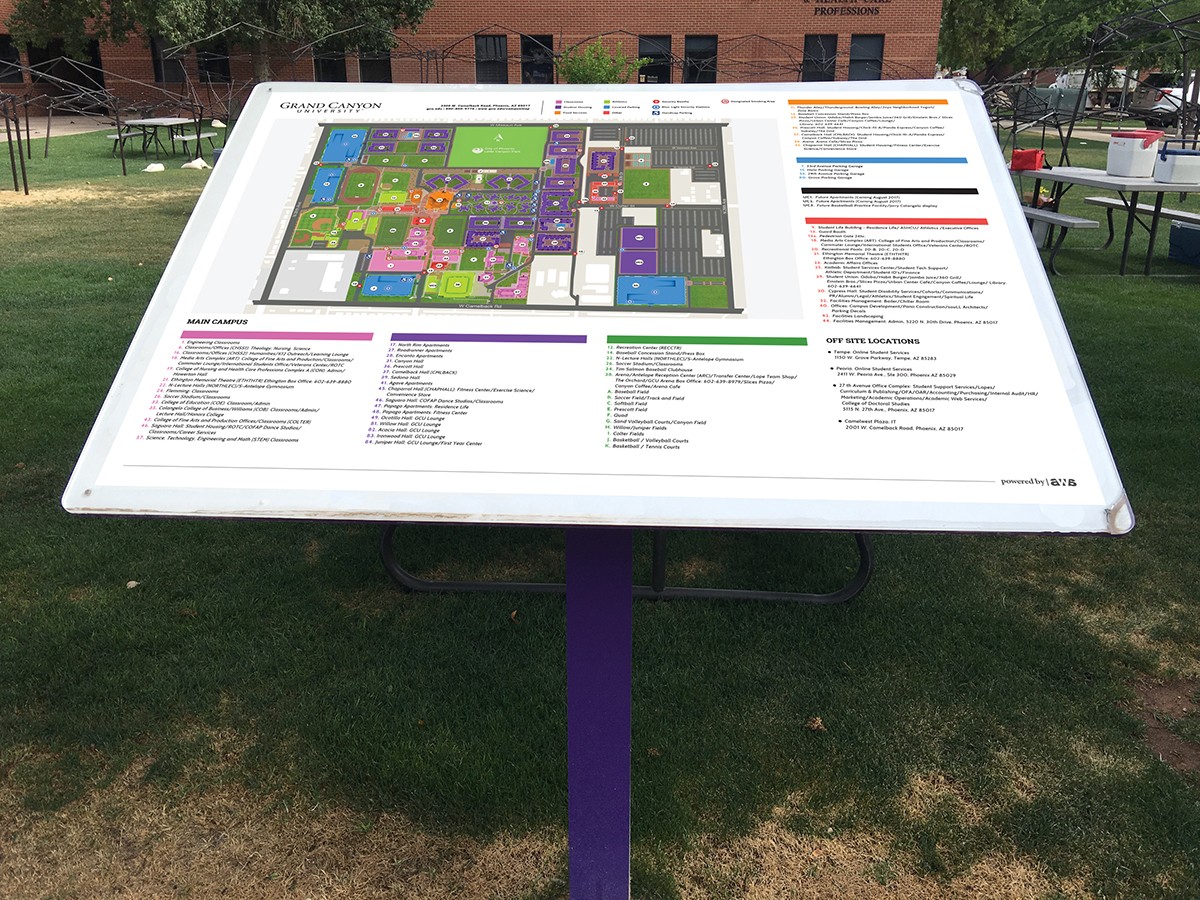
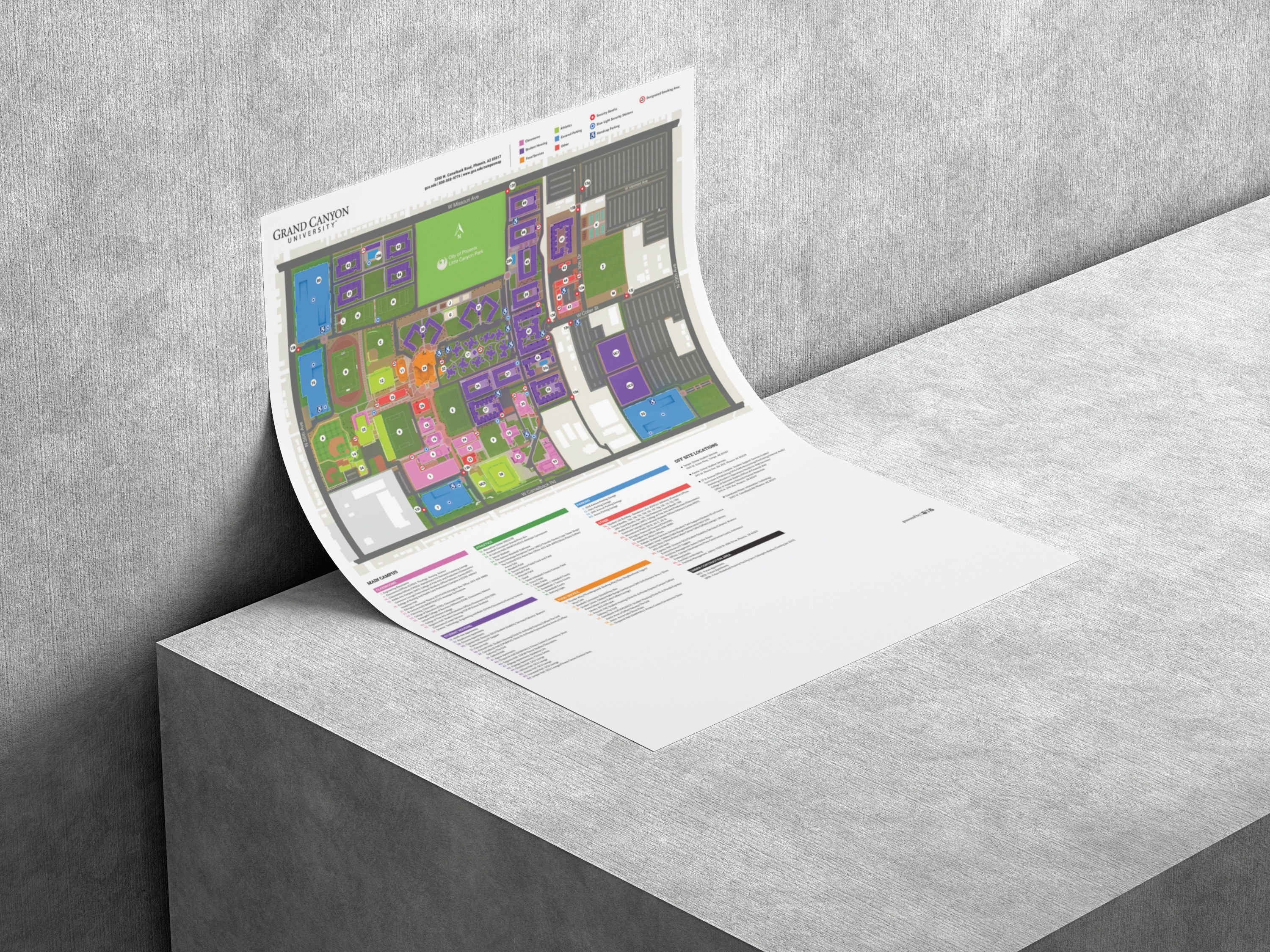
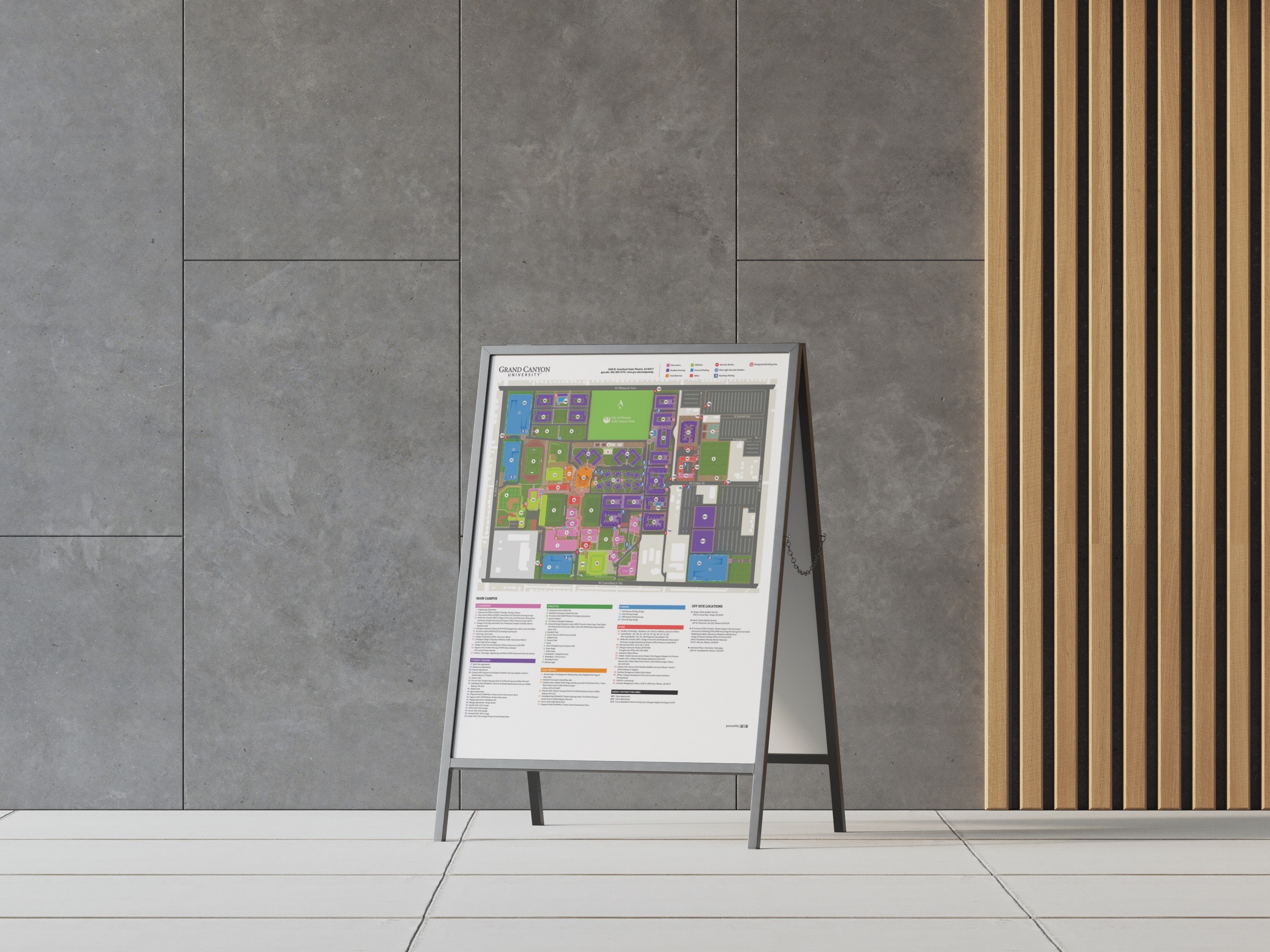
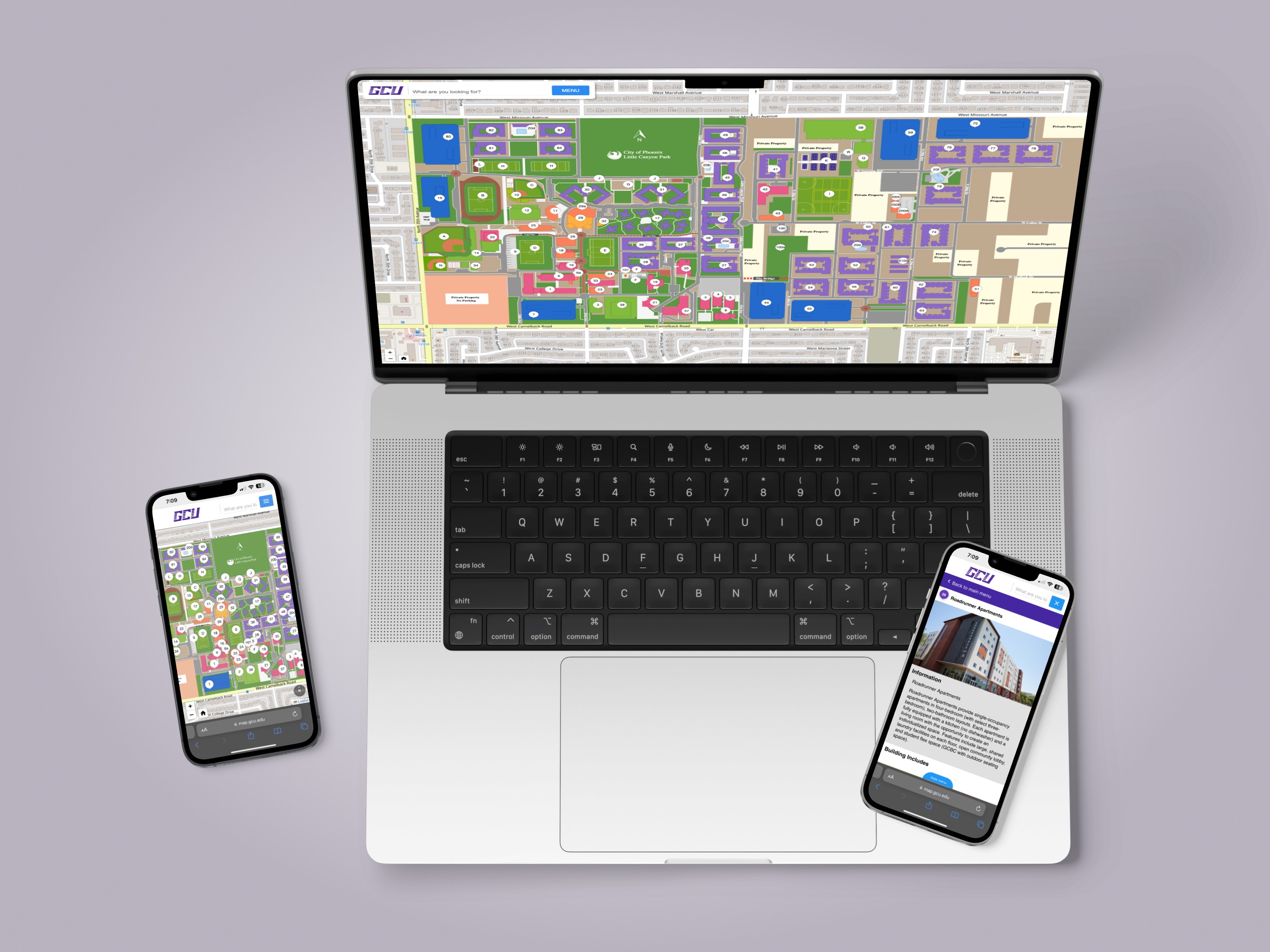
The Grand Canyon University project involved the creation of a comprehensive campus map designed to assist students in navigating the expanding campus. Initially conceptualized in 3D, the map swiftly transitioned into a vector-based format to prioritize speed and user experience. It was made available in printable PDF form for convenience, as a responsive website optimized for mobile devices, and strategically placed on pedestals throughout the campus. This multifaceted approach ensures that students can efficiently find their way around the ever-growing campus, enhancing their overall university experience.
Things Learned
The GCU Campus Map project provided valuable insights into effective design strategies and user needs. It became evident that while high-end visuals enhance aesthetics, they often compromise performance and pose challenges for regular updates. User feedback highlighted the importance of not just knowing the location of a building, but also understanding its internal layout. This emphasized the need for detailed interior information to be incorporated into the map. Additionally, there was a recognized need for features like walking navigation to guide students to specific classrooms, adding another layer of complexity to the project. These lessons underscored the importance of balancing visual appeal with functionality and the necessity of adapting the map to meet evolving user requirements.
Category:
Website - Printable - Kiosk
Client:
Grand Canyon University
Service:
Research - Design
Meet the GCU Campus Map
The Grand Canyon University project involved the creation of a comprehensive campus map designed to assist students in navigating the expanding campus. Initially conceptualized in 3D, the map swiftly transitioned into a vector-based format to prioritize speed and user experience. It was made available in printable PDF form for convenience, as a responsive website optimized for mobile devices, and strategically placed on pedestals throughout the campus. This multifaceted approach ensures that students can efficiently find their way around the ever-growing campus, enhancing their overall university experience.
Things Learned
The GCU Campus Map project provided valuable insights into effective design strategies and user needs. It became evident that while high-end visuals enhance aesthetics, they often compromise performance and pose challenges for regular updates. User feedback highlighted the importance of not just knowing the location of a building, but also understanding its internal layout. This emphasized the need for detailed interior information to be incorporated into the map. Additionally, there was a recognized need for features like walking navigation to guide students to specific classrooms, adding another layer of complexity to the project. These lessons underscored the importance of balancing visual appeal with functionality and the necessity of adapting the map to meet evolving user requirements.
Category:
Website - Printable - Kiosk
Client:
Grand Canyon University
Service:
Research - Design
Meet the GCU Campus Map
The Grand Canyon University project involved the creation of a comprehensive campus map designed to assist students in navigating the expanding campus. Initially conceptualized in 3D, the map swiftly transitioned into a vector-based format to prioritize speed and user experience. It was made available in printable PDF form for convenience, as a responsive website optimized for mobile devices, and strategically placed on pedestals throughout the campus. This multifaceted approach ensures that students can efficiently find their way around the ever-growing campus, enhancing their overall university experience.
Things Learned
The GCU Campus Map project provided valuable insights into effective design strategies and user needs. It became evident that while high-end visuals enhance aesthetics, they often compromise performance and pose challenges for regular updates. User feedback highlighted the importance of not just knowing the location of a building, but also understanding its internal layout. This emphasized the need for detailed interior information to be incorporated into the map. Additionally, there was a recognized need for features like walking navigation to guide students to specific classrooms, adding another layer of complexity to the project. These lessons underscored the importance of balancing visual appeal with functionality and the necessity of adapting the map to meet evolving user requirements.